

Raphael Yoon, guest author

Allow me to Introduce Raphael
I reached out to Raphael because, dang it, when studying the Ottoman Empire you ALWAYS run up against the legacy of the Roman Empire. The shadows of the Roman State are long and die hard, and the legacy of the struggle between the Roman Empire and the Sassanids (Sasanians- or Second Persian Empire) had far reaching consequences. I found Raphael's article incredibly insightful and helpful in understanding the plain simple fact the Ottoman Empire would inherit not just the political legacy of the Eastern Roman Empire (also referred to as the oxymoronic-"Byzantine") but their geo-strategic positioning as the gateway to the wider Middle East. This would be typified by Sultan Süleyman (Ḳānūnī Sulṭān Süleymān) and the Ottoman's arch enemy the Safavids-of.. you guessed it, PERSIA.
You can find Raphael's website here: All Roman History- Raphael Yoon
Raphael's Facebook here: Facebook LINK
Raphael's X (Twitter) here: Twitter(X) LINK
Raphael's Instagram: Instagram LINK
I hope you enjoy Raphael's insightful article as much as I did!
-Frank
The City of Dara: A Strategic Past
by, Raphael Yoon
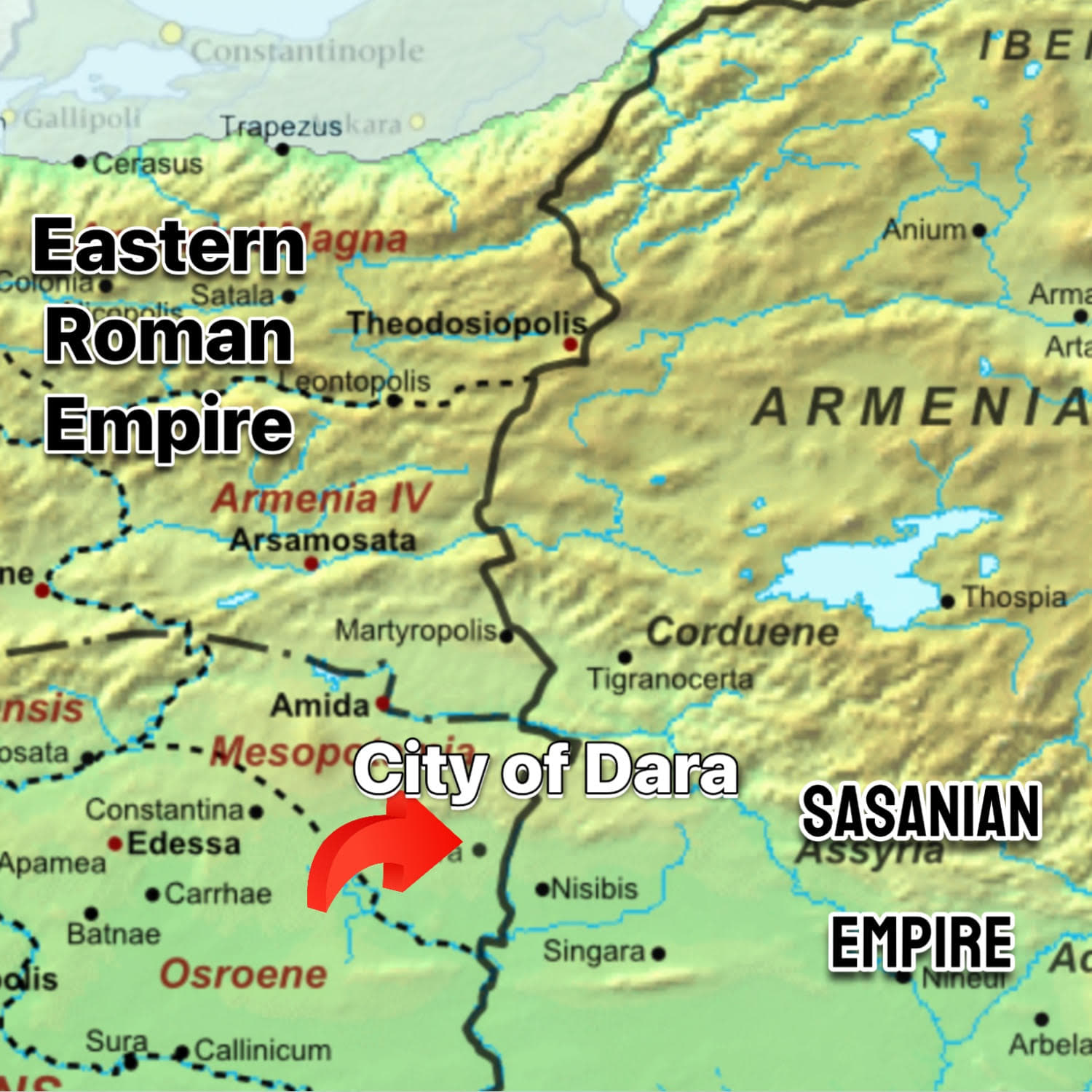
You might have heard of Dara with the battle in 530 AD or, to a lesser extent, its fall. However, what about its origin: becoming a military base and city? It all started under Anastasius I, and the origin came from a war against their Eastern rival- the Sasanians.
Anastasian War(502-506)
In May 503, Anastasius I sent Areobindus and 12,000 cavalry near Dara and Annodius against Nisibis. Areobindus' purpose was to defend the 40,000 men under Patricius and Hypatius besieging Amida for reconquest due to Kavad's successful siege in late 502 to January 503. Kavad sent 20,000 cavalry from Singara against Areobindus but failed to dislodge his position.
During the Anastasian War, the Roman commanders realized they needed a base of operations to counteract Nisibis, which the Sasanians took due to Julian the Apostate's failed Persian invasion in 363. They considered two locations: Ammodius and Dara. Anastasius dispatched Bishop Thomas of Amida to have engineers at the two sites. Conclusively, Anastasius chose Dara- a water supply and three hills acting as natural defenses. Also, it was part of Anastasius’ eastern frontier policy to have a primary and strategic base. Also, it would address his commanders’ complaints about not having a base to be the counterpart to Nisibis.
Construction of Dara
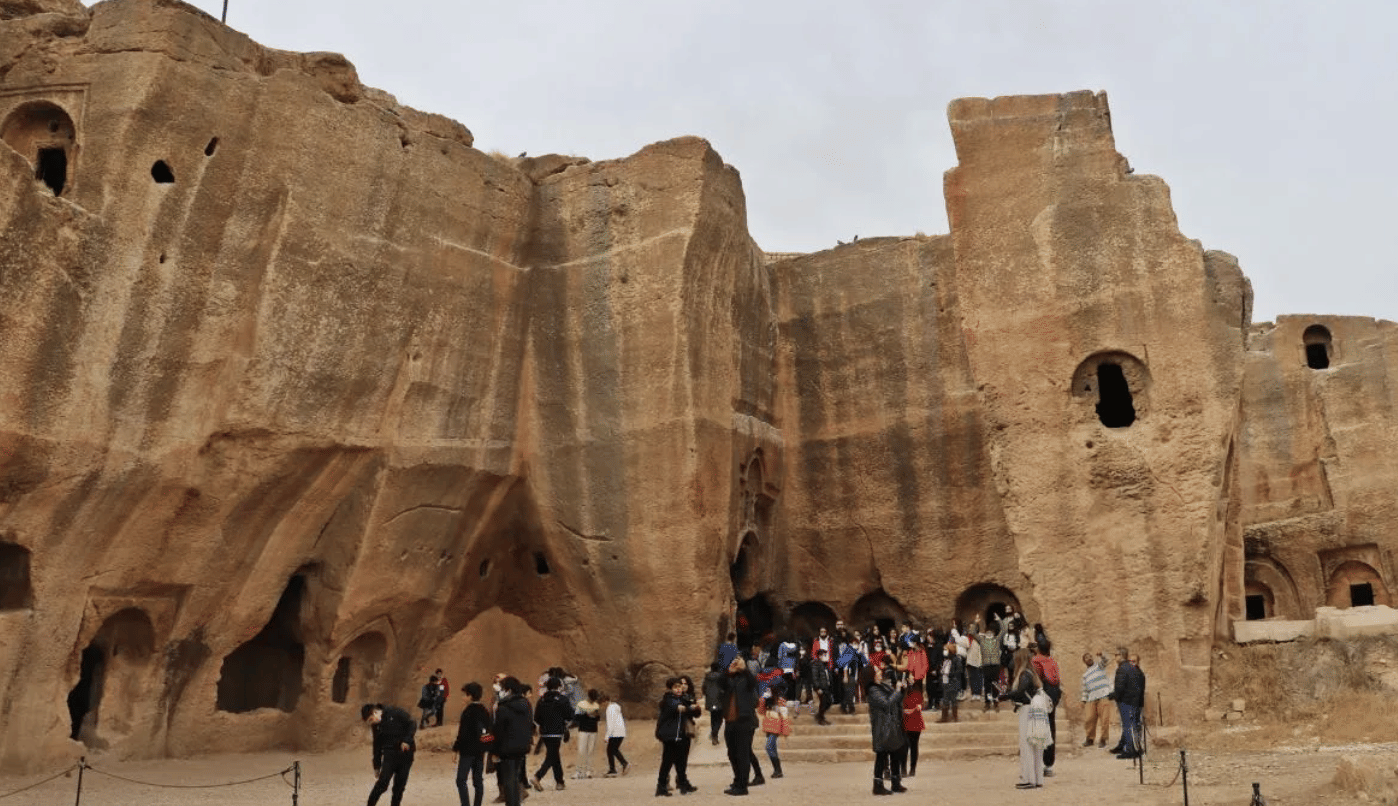
(Source: alltoursjurkey, today you can visit the ruins of Dara in Turkey)
From late 505 to 507, Pharesmanes took control of military action for Dara and resided in Amida. The Magister Officiorum or Master of Offices- Flavius Celer- sent him, and he was in Apamea in the winter of 506. From April to September, he was in Edessa. The populace complained against Celer about the Gothic foederati killing the leader in Edessa. Celer decided to move troops to Dara for negotiations. In August, Celer went to Dara and arrived by September to defend and negotiate with the Sasanians. They returned to Nisibis out of fear of treachery. They concluded a treaty by November, which secured a seven-year truce. By 507 or 508, the Romans finished the circuit walls. During the construction, there were water systems, statues of Anastasius, and storehouses. The name "Dara" changed to "Anastasiopolis." In addition, workers received their pay regularly. Finally, Michael Whitby and Geoffrey Greatrex's perspective was that during Anastasius' reign, Dara was the residence of the Mesopotamian leader.
Monophysitism
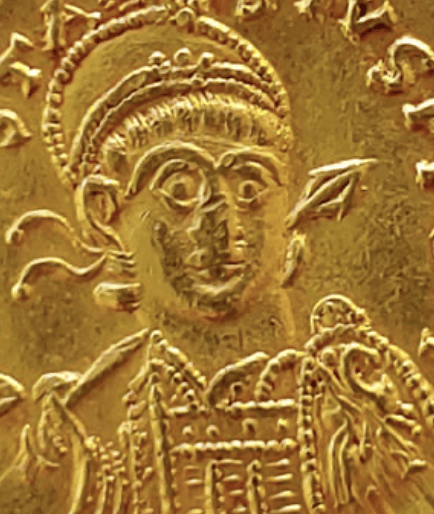
(Source: coinsandmore, Anastasius I)
Anastasius I also showed his religious motive: making Dara a Monophysite city. Eutychianus was a Monophysite bishop. In addition, there were two churches: the Great Church and the church of St. Bartholomew. Bishop Thomas gave money to build them.
Dara emerged from being a village to a military base for offensive action, readying weapons, and respite. Priscian did not mention Anastasius' building projects in Dara as one of his achievements. Procopius of Caesarea downplayed him and praised Justinian, but Justinian did not create the two churches- the Great Church and the church of St. Bartholomew.
Kavad’s Reaction
Kavad saw the construction of Dara as a violation of the 422 treaty: not allowing any additional fortifications on the frontier between the Romans and Sasanians. He wanted to stop it, but the completion of the circuit walls prevented him from doing so. Anastasius paid some money to appease Kavad while continuing with the fortification. Later, in 530, he tried to capture it but failed.
Final Thoughts
To the Romans, Dara was the response for the eastern frontier against the Sasanian base of Nisibis. The loss occurred after Julian the Apostate’s failed military campaign against Shapur II in 363. It provided military necessities, water systems, and defensive capabilities. Dara faced changing hands from the Romans and Sasanians multiple times throughout the sixth and early seventh centuries. However, in 639, the rising Rashidun Muslim Caliphate captured it for good.
Sources
-Blockley, R.C- East Roman Foreign Policy: Formation and Conduct from Diocletian to Anastasius, (Francis Cairns, 1992)
-Bonner, Michael R. Jackson- The Last Empire of Iran, (Gorgias Press, 2020)
-Farrokh, Dr. Kaveh- Shadows in the Desert: Ancient Persia at War, (Osprey, 2007)
-Greatrex, Geoffrey- Rome and Persia at War, 502-532, (Francis Cairns, 1998)
-(Eds.) Greatrex, Geoffrey and Lieu, Samuel N.C- The Roman Eastern Roman Frontier and the Persian Wars, Part II: AD 363-630, (Routledge, 2002)
-Haarer, Fiona K- Anastasius I: Politics and Empire in the Late Roman World, (Francis Cairns, 2006)
-Joshua the Stylite- The Chronicle of Pseudo-Joshua the Stylite, trans. by Frank R. Trombley & John W. Watt, (Liverpool University Press, 2000)
-Kaldellis, Anthony and Kruse, Marion- The Field Armies of the Eastern Roman Empire, 361-630, (Cambridge University Press, 2023)
-Nicks, Fiona K- “The Reign of Anastasius I, 491-518” [Doctoral Thesis, St. Hilda’s College], (Oxford University Press, 1998)
-Svyänne, Ilkka- The Military History of Late Rome, AD 457-518, (Pen & Sword Military, 2020)
-Zachariah of Mitylene- The Syriac Chronicle Known As That of Zachariah of Mitylene, trans. by F.J. Hamilton and E.W. Brooks (Methuen & Co, 1899)