🇹🇷Ottoman Empire Podcast 🇹🇷
The very BEST way to support the show is to join the Patreon
Click Here➡️ Empires Podcast the Ottomans Patreon Support ⬅️
WHAT YOU GET
Janissary Recruit: $3.00
✅Cheaper than a cup of☕ from Starbucks
✅Gives me motivation to continue on!
✅Early access to ALL episodes
✅Exclusive EXTRA Episode content
✅Access to Frank ☎️ (ask me anything anytime)
✅💯 ad free AWLAYS
Grand Vizier: $8.00
✅EVERYTHING 1st Tier
✅YOU can suggest and collaborate with Frank on ANY areas of interests
✅Producer Credit to be read about in EVERY episode and in show notes
✅Are YOU a podcaster? Have a side gig? Want a SHOUTOUT for your show, gig or business EVERY Episode? Join today!
Click Here➡️ Empires Podcast the Ottomans Patreon Support ⬅️
So I was listening to Douglas Batchelor's What Magic is This? ➡️Which you can Listen to⬅️
episode with Dr. Jeffrey Kripal. He (Kripal) said something profound about reality being ultimately anecdotal. This sat heavy with me sparking an interesting thought that combined my passion for the Ottoman Empire and my fascination with the paranormal. Just so my readers/listeners know I've been listening to "What Magic is this?"- playing it in the background as of late. Which, led me to consider how I keep encountering magic in the Ottoman Empire. Jason Goodwin, and Caroline Finkel in their books frequently mention the Ottoman perception of time being fundamentally different from the West. They had a circular view of time and believed a man's intentions, especially if his intentions were perfectly infused with the uncreated energies of Allah, via magical practices by use of Arabic characters and rituals (see the weird and wonderful practices of the Sultan's in the Topeka Palace) thus the Sultan was called God's Shadow:
Magic first pops up before the Ottomans became a power in the hinterlands of Anatolia. When the legendary founder Ertugrual first intervened in favor a Seljuk Turkic band thereby securing for himself and his future dynasty land holdings. In the story Ertugural followed a "strange Orb" or sign in the sky, most notable his traveling "witch" conjured up spirits and allegedly held healing powers.
His son, and first real historically documented Osmanli we have on record, allegedly had a dream in which he saw a tree growing from his loins and encircling the entire world. He would later create clay figures of his enemies and, as the stories go, conduct heretical practices with Turkish "shamans" to curse his enemies and give him powers in battle.
The early childhood education of Sultan Mehmed II (Conquer of Constantinople) it was said his teacher, mentor, and overall spiritual advisor, Akşemseddin not only dealt in science and math, but also the more intangible facets of reality. He believed the mind could influence physical reality. He developed elaborate rituals and every town the Ottomans conquered he send out word looking for magicians, witches, and shamans so he could milk out their knowledge. He would go on to issue the very first Muslim Call to Prayer at the Hagia Sophia (since converted to a Mosque) on May 31, 1453 (this strange blend of Islamic orthodoxy mixed up with heterodox practices).
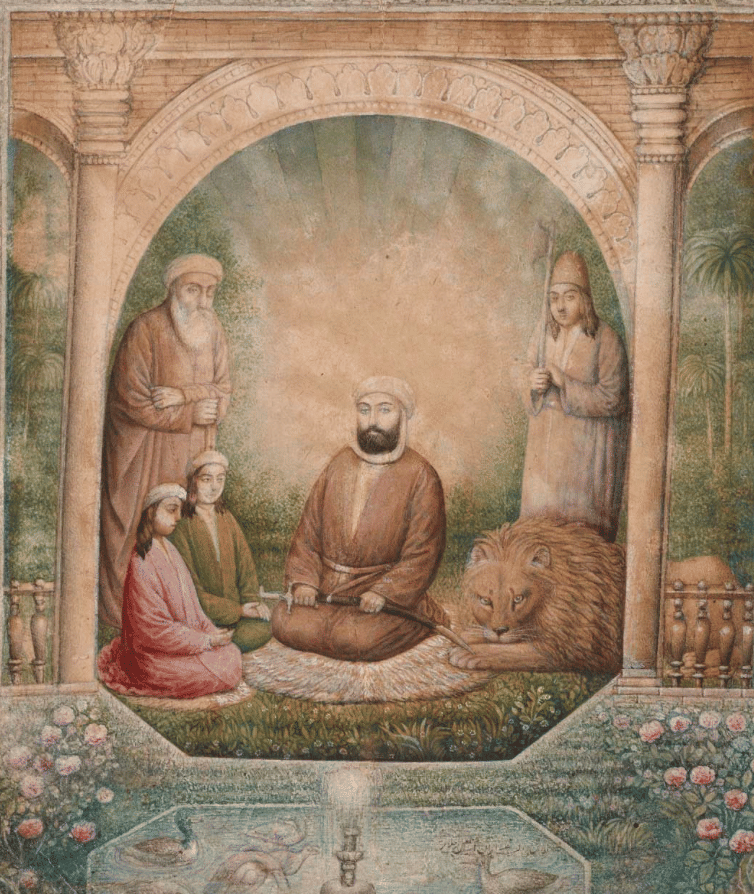
(Source: Istanbul.org- Sufi-Bektashi Order)
I've been reading "Memoirs of a Janissary"
and this stack of books on the Grand Old Ocak scattered about the Ottoman Empire Podcast's headquarters (generously donated by a listener).. also knows as my spare bedroom. A common reoccurring theme in this entire podcast beginning with Episode 1 "The Dream of Osman" which you can listen to here ➡️Episode 1 the Dream of Osman⬅️ a theme keeps popping up is the heterodox nature of the Ottoman State.
On the outside the Ottoman Empire contained the prerequisites of a theological Islamic state, Kadis (Judges) Ulmea (state sanctioned religious scholars and scribes), and an approved Sunni Orthodoxy enforced by Sultanate laws throughout all conquered lands from Anatolia to the Danube River in Ottoman Europe (Rumelia). Yet, as we've covered in recent episodes after the Conquest/Fall of Constantinople, tensions were heating up with the Mamelukes of Egypt, the Karamanid State in South Eastern Anatolia, and the Safavids of Persia.
And yet.. always in the background the Ottomans had a reputation as orthodox Muslims by day, and sigil magicians by night.
Much ink has been spilled concerning the Sunni vs Shia divide and attempt at the history must tell the story of the wars between the Ottomans and Safavids, especially during the reign of Ḳānūnī Sulṭān Süleymān (Suleiman the Magnificent) and his brutal campaign at Karas in the mid 1500s (the reverberations of which can still be felt today with with forcible resettlement of the Kurds and Armenians).
I have a stack of documents in Ottoman Turkish I'm working on translating concerning first hand accounts of Viziers, Pasha, Orta Commanders, Akinchi, Akreniacs, and many other records dealing with Magic firsthand in the Ottoman Empire. Translations are slow but it will be the source for further discussion on this topic.
What isn't talked about much was the aforementioned perceptions of the Ottomans and their state apparatus (collectively the customs, traditions, unique court functionaries which greased the tracks of empire were referred to as the Sublime Porte - French for Turkish Bâbıâli or the High Gate) heterodox at best and outright schismatics and heretics at worst.
From the Traditional Islamic Perspective even the name Sublime Porte (High Gate)..
was a cryptic reference to the mystical magical practices of the off-shoot Sufi Cult called the Bektashi Order. A strange religious/military cult which had more in common with Western practices of monasticism and knighthood and yet represented a convergence of Shia religious proclivities towards the near worship of the Companion of Muhammad (PBUH), named Ali.
At the center of the Bektashi religious order was the kitchen. Everything from ranks (officers had rank names like "fork" "knife" etc..) seems weird from the outside but the kitchen was also the center of the Bektashi magical practices along the Islamic lunar calendar.
Old Turkish Magical Practices from the Steppe Die Hard
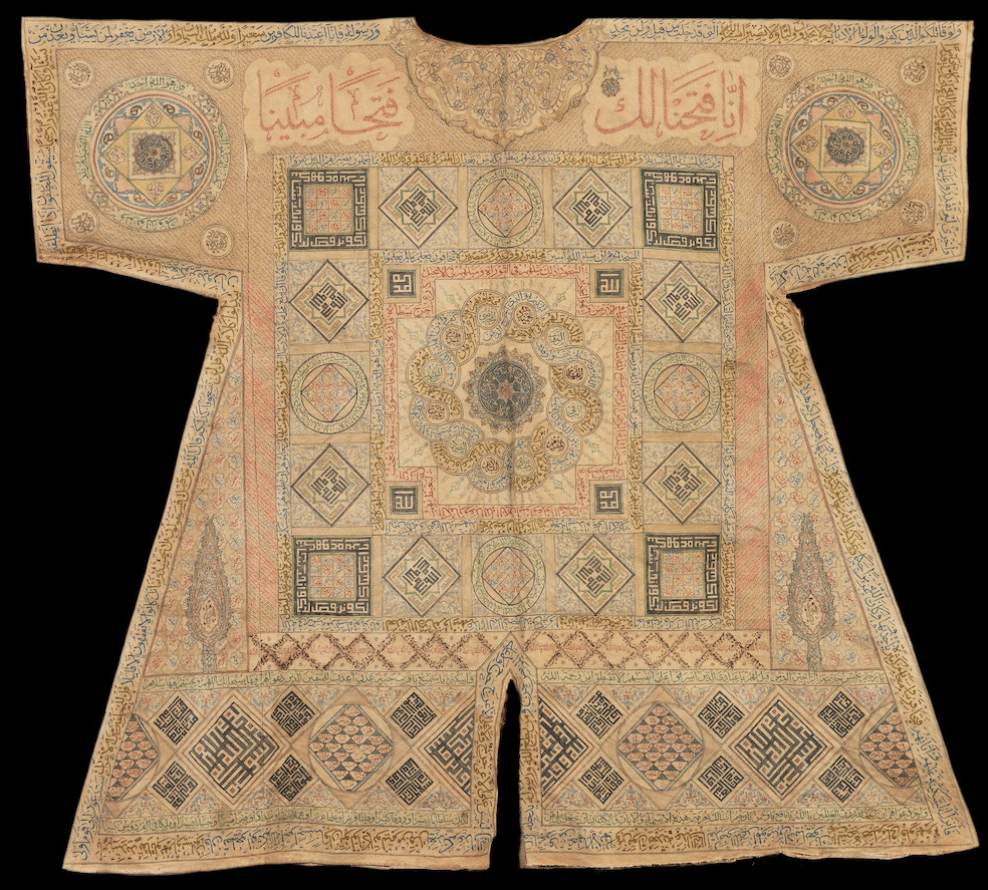
(Source: Eastworld)
The above picture is of a "talismanic shirt" the Ottomans had a practice of weaving Arabic characters and infusing them with magic spells and invocations. The source of which originated deep in the Steppe near the borders of China. Within the Great Families of Antonia Turkish sions still kept books of magic, spells, and rituals. The idea being that Arabic characters carried the sacred word of God.
Even today there is a cottage industry of sorts in Turkey of so called Magicians selling scrolls, talisman, magical jackets and the like. Since the original spells and rituals would all of been in either Old Persian or Ottoman Turkish, I'm not sure anyone can vouch for these guys.
(PICTURE ABOVE: There is a "dark" side to Sufi mysticism the Western academics don't like us to see. This particular tradition & practice is as old as the Turkish people themselves-I can't even pretend to translate it from Old Persian/Turkish, is meant to show the devoted disciple the circular nature of time. An old practice attested to by Christian accounts of the Ottoman's Elite Shock Troops the Janissaries- SOURCE: https://medium.com/re-visioning-religion/the-dark-side-of-sufism-d2cd8d2e8fd4)
"Premodern Islamic theology (and its Christian counterpart as well) makes a distinction between miracles and marvels. The former are acts of God breaking the customary course of natural events, granted by God to prophets and saints as a sign of His grace and as a way to persuade people of their mission. The latter are events and phenomena that cannot be grasped by the human intellect, at least not by that of common people, even though they belong to the usual course of nature, what we now would call paranormal activity, for instance. These marvels and wonders, known in medieval Europe through collections of mirabilia, were termed as “preternatural” in the scholastic philosophy of Thomas Aquinas, and as aja’ib and ghara’ib in Islamic cosmographies. These were wonders of the world, acts attributed to the jinn, and of course shifting ways of interpreting natural phenomena, since meteorological events or marvels such as the construction of beehives by bees belonged to this category. For some authors, even magic belonged to such kinds of marvels, since it is nothing but the manipulation of secret hierarchies in nature. Thus, a talismanic property of a place, like this mosque without spiders, can be considered a marvel—not a miracle, which would be an unrepeatable act by a prophet or a saint." (From East.com) LINK https://easteast.world/posts/357#
I'll have a whole more to say on the subject of "Magical Practices" and the Ottoman Empire as I dive deeper into the sources. In the meantime time to get back to researching Sultan Mehmed II.
-Frank