Empires Podcast the Ottomans
The very BEST way to support the show is to join the Patreon.
WHAT YOU GET:
- Early access to main narrative episodes
- I'm currently writing/recording a really cool series of EXTRAS to be released exclusively on Patreon.
- Other goodies!
Click Here➡️ Empires Podcast the Ottomans Patreon Support ⬅️
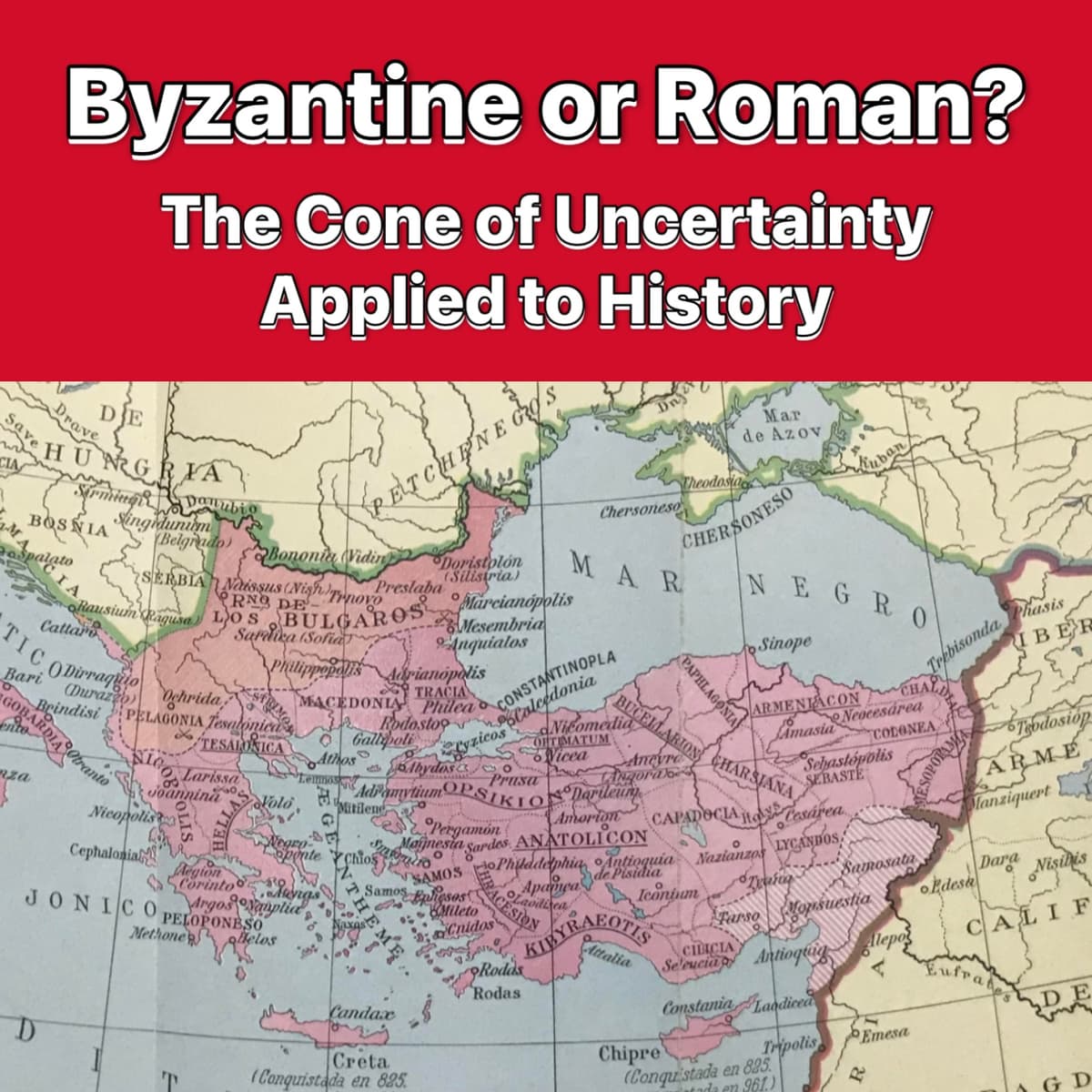
Byzantine or Eastern Roman? The Cone of Uncertainty Applies to History
So Yesterday I was on X (Twitter)
When the wonderfully insightful and well researched account, ShadowsOfConstantinople (@RomeInTheEast), of which I'd like to point out his Link Tree for really cool all things Roman here ➡️https://linktr.ee/shadowsofconstantinople⬅️ posted the following:
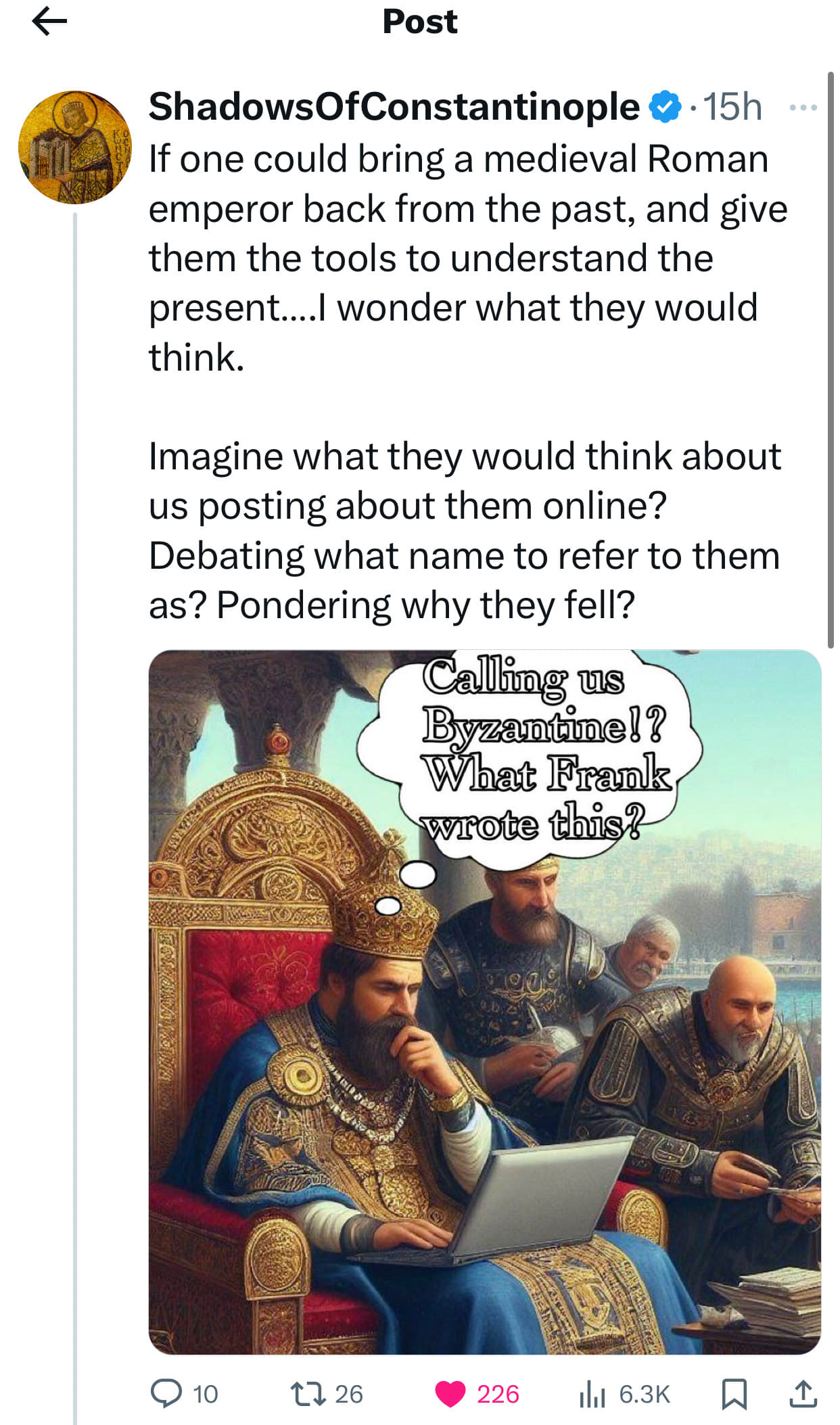 (All Screenshots from @EmpiresPodcast, of which I was a participate in this conversation)
My Thoughts
"We'd all sound like sputtering idiots" or "what the hell is all this stupid ass AI art?" My mind instantly went to Empires Podcast the Ottomans as I shuttered at my pronunciations of Ottoman Turkish on the show. Then my mind drifted to more esoteric thoughts namely the following:
- The "Cone of Uncertainty" applies equally to the past as well as the future.
- How do we know the past? Especially us Westerners who can't even hardly take a stab at the original languages of our primary source material (let alone get our hands on it)
- What's so bad about "Byzantine"? Or more broadly, how have we become so emotionally and intellectually invested in one version of our past versus another? Is the past "real" in any sense of the term?
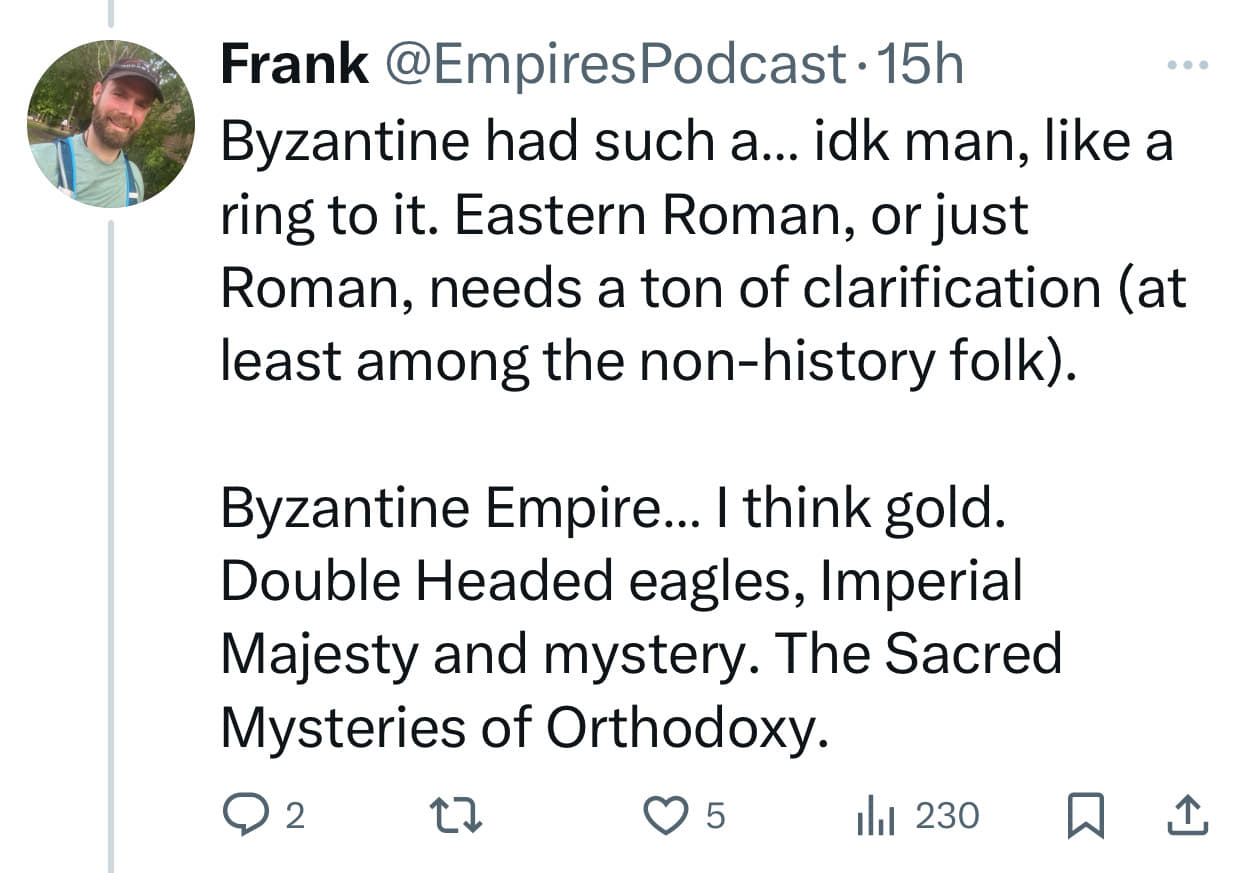
So You Can Imagine How Well my Comment (that's me up there) Went with the Eastern Roman Byzantine FanBoys
I'm learning a lot as I progress as a Podcaster and history buff. I've seen on X (Twitter) the different tribal affinities history fanboys have : Just try starting up a blog or podcast on the Ottoman Empire and you're soon to be inundated by Muslim Nationalists or Christian Radical Traditionalist (Who believe, seriously, that Lepanto was a miracle-hint Europe could have used a miracle like at Lepanto hundreds of years prior just sayin') you'll also, occasionally, run up against the remnants of the Eastern Romans..... such as my friend here. Like the very last holdouts dotting the Levant and Southeastern Balkans after the Conquest of Constantinople in 1453... the Eastern Roman fanboys stand valiantly against the every encroaching tide of majority of people using the term "Byzantine"
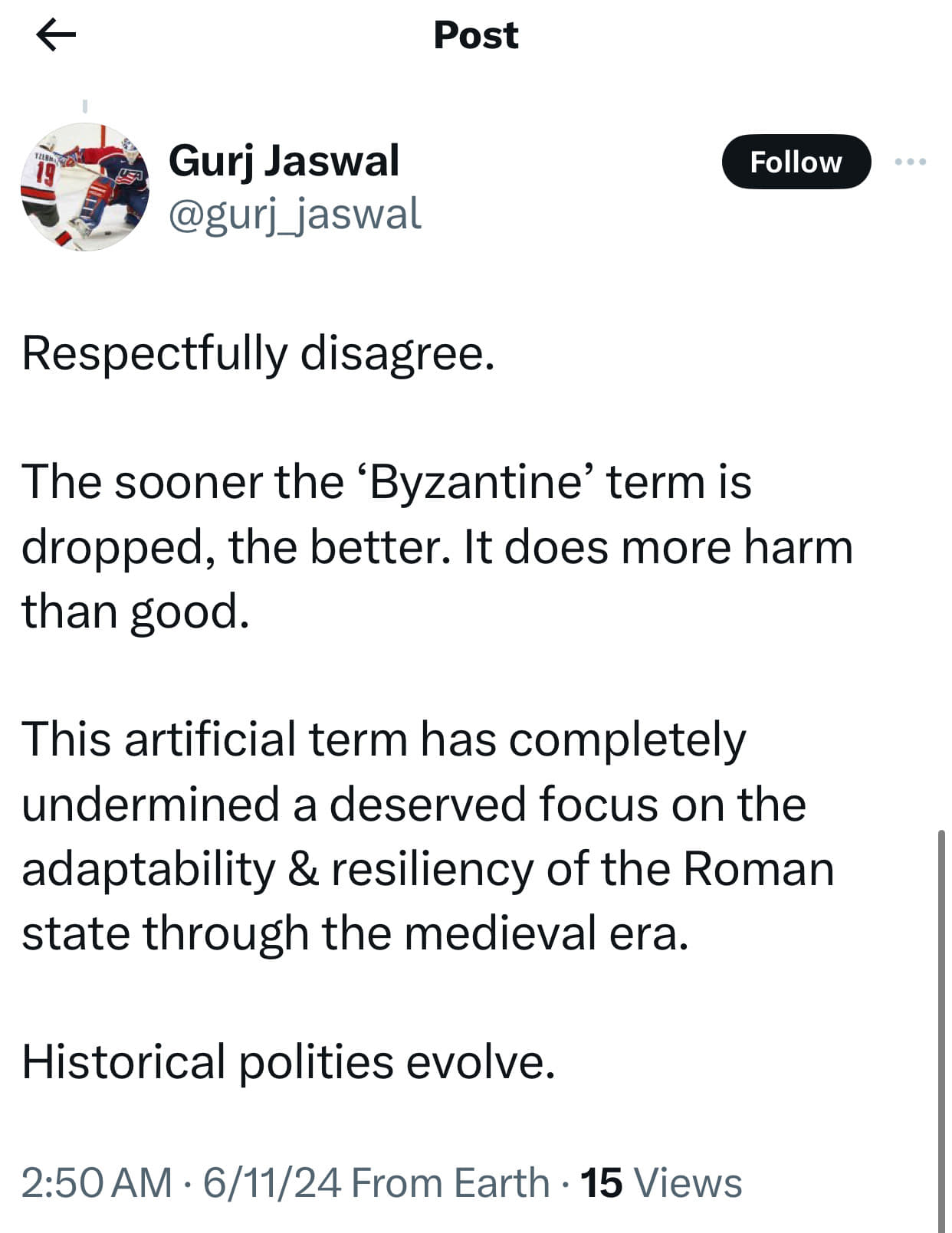 This Left me Bit Confused
For one, who, exactly is harmed? The memory of the Romans? Their legacy? I mean.. the Romans (Eastern/Byzantine) were fucking badasses. WE ALL KNOW THIS.
Nobody is denying that.
Shaped the modern world and all that.
Just ask people if they've heard of the Ottoman Empire... you'll get blank stares. Ask about the Roman Empire... and their eyes will perk up and you'll at least have SOME type of conversation. Or have we forget the "Thinking about the Roman Empire" trend just last year?
In producing Empires Podcast the Ottomans I found the Eastern Romans referred to themselves simply as "Romans" Or Roman Empire. However, as every single book I've read thus far, historians artificially put the distinctive "Eastern" to get the point across that "Hey this isn't the Rome-Roman of Julius Caesar, or Hadrian, or of the old Temple Gods" and the VAST majority at least use Byzantine some, if not all of the time.
 (Someone needs to tell Jason Goodwin the Venerable Romans would be super pissed off he referred to them as "Byzantine")
Cone of Uncertainty
Which led me to my first meditation: the Cone of Uncertainty applies equally to the past as well as the future. First, what is the Cone I speak of?
The best way to explain it is to imagine a hurricane somewhere far out int he Atlantic. When you open up your weather app it first appears as a small dot. Then it slowly get's bigger and bigger. As it developed the weather people show dotted lines and cones of where, base upon computer models, they predict the storm will go. The models are super strong a day, or three days out, but then the cone gets bigger and bigger.... the storm is harder to chart where it'll go the further into the future you get.
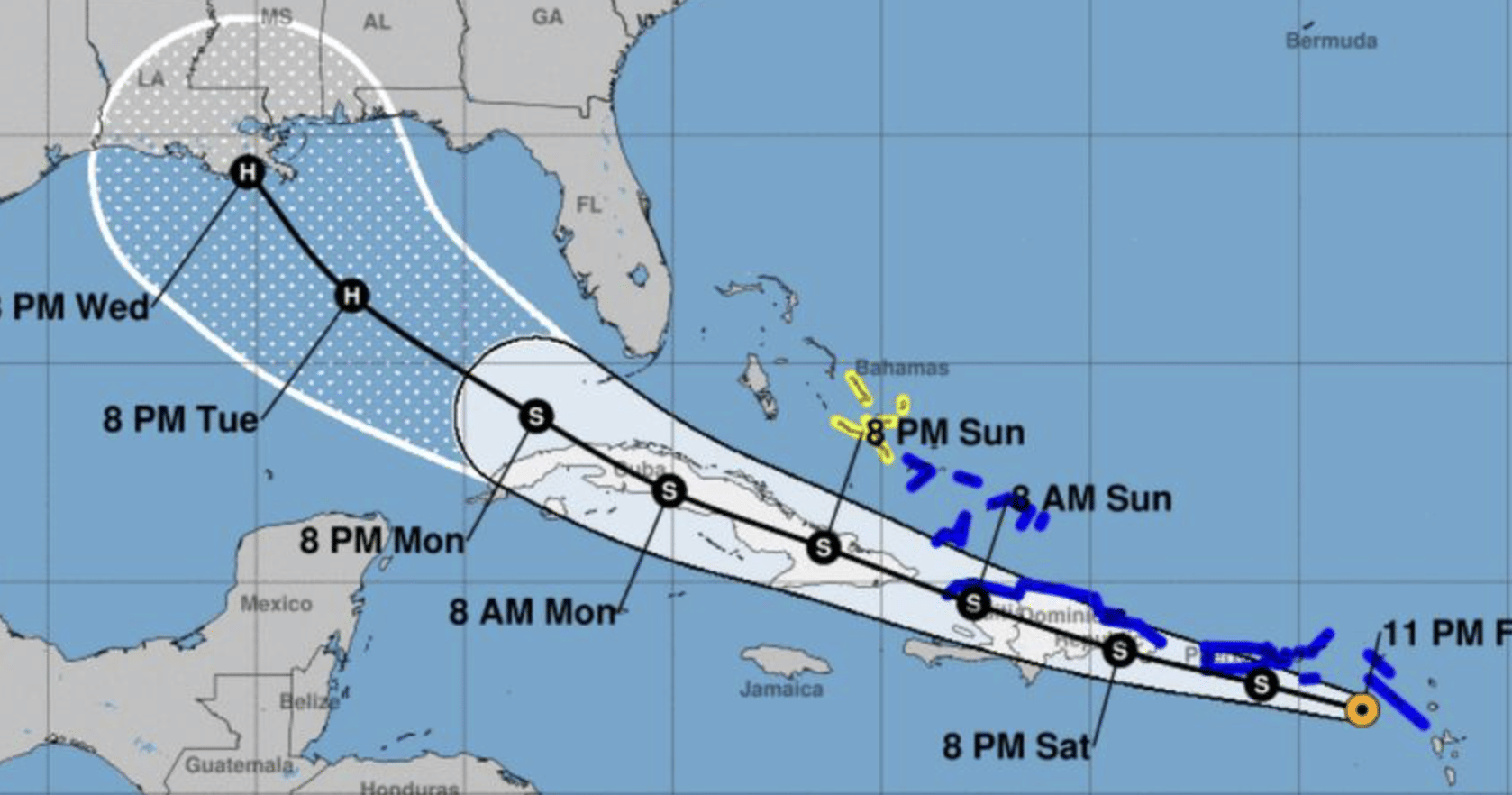 (Tropical Storm Laura: Source Free Stock.com)
History isn't as clean as charting a storm. With Tropical Storm Laura, as you can see, if we pulled up our maps we can trace its origin almost perfectly. The way history works, however, is a bit messier.
Almost everything we know about the past comes from written sources. In history we make a distinction in the types of written source material used:
- The greatest and best is PRIMARY sources: These are source material "from the horse's" mouth. When you read Caesar's "Dispatches" these are about as close to primary source material as most of us will get (you can try and track down the original copies of copies of copies floating around). Or, if you look at the original U.S. Constitution.. that's a primary source. Letters from soldiers during wartime, diplomatic exchanges, I could go on and on.
- Then you have SECONDARY sources: These are, for our purposes here, the stuff people write about the primary source material. So like Jason Goodwin's book "Lords of the Horizons" is a perfect example. When I open up his book I'm not actually reading Ottoman Turkish, or Latin, or Greek dispatches, letters, ledger entries about the Ottoman advance into Europe or any first hand accounts, I'm reading up on what someone else has penned.
- Then you have this THIRD category I fit into. Namely I'm pulling my information from mainly SECONDARY source material. Re-tooling it into Empires Podcast the Ottomans then putting it out there into the world. And if all the history podcasters and Fanboy accounts are honest with themselves we fit into this category. All of us.
And if the Fanboys on X(Twitter) Discord and are being honest with themselves
..they fit into this THIRD category too. I hardly believe anyone outside of academics are reading off of stacks of papers and parchment in old Ottoman Turkish (Of course I'm wrong I've met many Turks since doing this show who do indeed keep the language alive. BUT they're all in the colleges).
So we can argue all day on X about this or that Byzantine or Eastern Roman.. but at the end of the all we really know about the Romans (Eastern or otherwise) are stacks of books, architecture, and the human memory or imagined memory of this ancient entity.
History is not some fixed point I've slowly discovered. We can try and anchor it in the great buildings like Hagia Sophia, or in common dates like 1453... but all we've got for dates are old pieces of paper and the collective memory and stones left by these civilizations. WHO these civilizations were, how they felt, thought and expressed themselves, exist ONLY IN THE HUMAN MIND.
Minds which are living. Us. You and me.
Not in some unchanging reality of the past.
And thus I sense a Cone of Uncertainty when it comes to the Eastern Romans. Things get murky when you study the subject. The Romans aren't here to speak for themselves. All we have are their writings contemporaneous with their times (in which they referred to themselves as "Romans").
Studying history is a bit meditative experience. I've often wondered if not a few historians practiced some archaic for of Magikal Arts. You can't help but feel the Magik alive when you study a Sultan Mehmed II and trace with your fingers his Sigil and doodles on the margins of parchment while he was a virtual kept-prisoner in Mansia.
So Now my Final Thought: What's So Bad About Byzantine?
Namely, whom is being harmed?
Almost EVERY SINGLE secondary source on the Roman (Eastern) Empire I've read.. by PROFESSIONAL historians.. (as opposed to us on X LARPING about the Ottomans and Romans) use the term.
It's standard in academic settings. In publications.
More importantly: nobody knows what the hell you're talking about 99% outside of us history buffs when you use "Roman" to describe the Empire centered on Constantinople.
Nobody.
It just goes to show.
History changes. It's not fixed in time. It's a weird feeling.
-Frank